On public space: an interview with composer, musician and academic Paul Mac
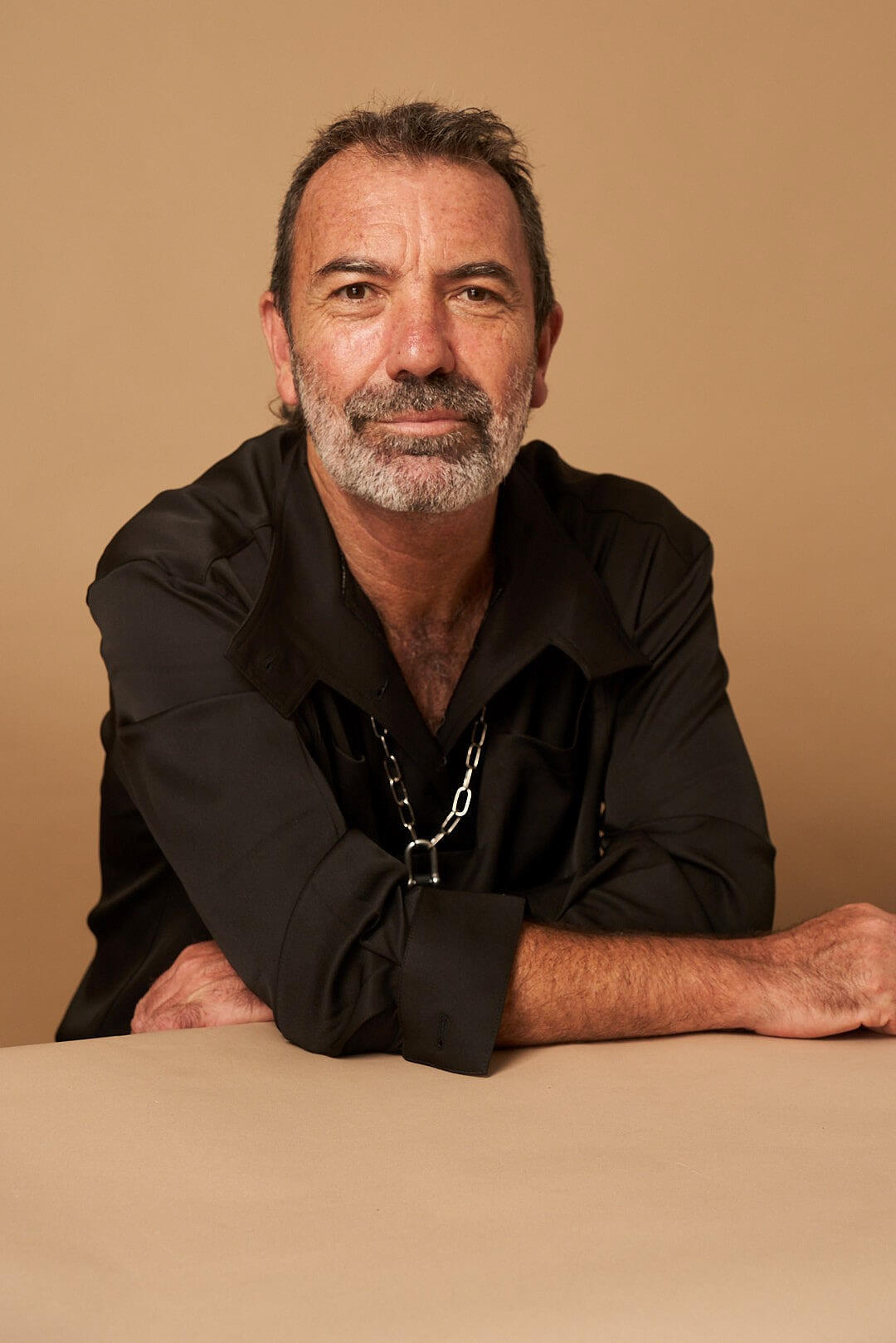
Paul Mac is one of the legendary figures in Australian electronic music. He is a composer, songwriter, musician, producer, remixer, and academic. Paul is a multi-ARIA Award winner for his work with underground rave pioneers Itch-E & Scratch-E, and for his own solo work.
He has released an album to much acclaim under the moniker, The Dissociatives, with Silverchair’s Daniel Johns. He also co-wrote and co-produced Ngaiire’s ground-breaking “Blastoma” album.
Paul scores music for film, TV, and theatre, and has collaborated with Bangarra Dance Theatre on the acclaimed productions BLAK, and “Miyagan” from OUR land people stories. He also composed the score for the Kath & Kimderalla movie. Credits for Paul’s remix duo, Stereogamous, include LCD Soundsystem, Rufus Du Sol, George Michael, Sia, and Kylie.
Paul’s career highlights include the Australian Dance Music Awards for Outstanding Contribution to Dance and Producer of the Year.
After completing a Doctor of Musical Arts, Paul is lecturing at the Sydney Conservatorium of Music. He is now focused on large-scale works that broaden his practice, such as The Rise & Fall of St George and the Vivid 2024 hit Tekno Train.
As an artist, how would you define what public space is, and what draws you to working in public spaces?
Part of dance music and club culture is creating a space that lends itself to community and to self-expression. Dance music has a history of commandeering public spaces, which is part of its attraction to me in some ways. I think clubs themselves are a sort of tempered public space, because there is a sort of selection process often, as to who can get in, which affords a freedom, particularly to marginalized communities. Being queer myself, I know clubs can be a safe space for me, where I can meet like-minded people who share a passion for music. The music itself also provides a kind of alternative free space, an atmosphere, or fictitious landscape that you can immerse yourself in. Sometimes these spaces maybe only exist for maybe one night a week, but they become, you know, like our church, a safe space where our community could self-express.
In Sydney I DJ'd for a group called Reclaim the Streets, which was putting dance events on in public spaces. The organisers would work with the police, letting them know the location in advance. Reclaim the Streets was a political statement, a reclaiming of our environment, reclaiming it from cars, and reclaiming public space for events that allow this kind of self-expression, just to remind people that this is important. We weren't out to destroy anything, or to inconvenience anyone too much.
It was just a reminder that public space is for the public, not just cars, not just commerce, and not just capitalism. I think that's really important.
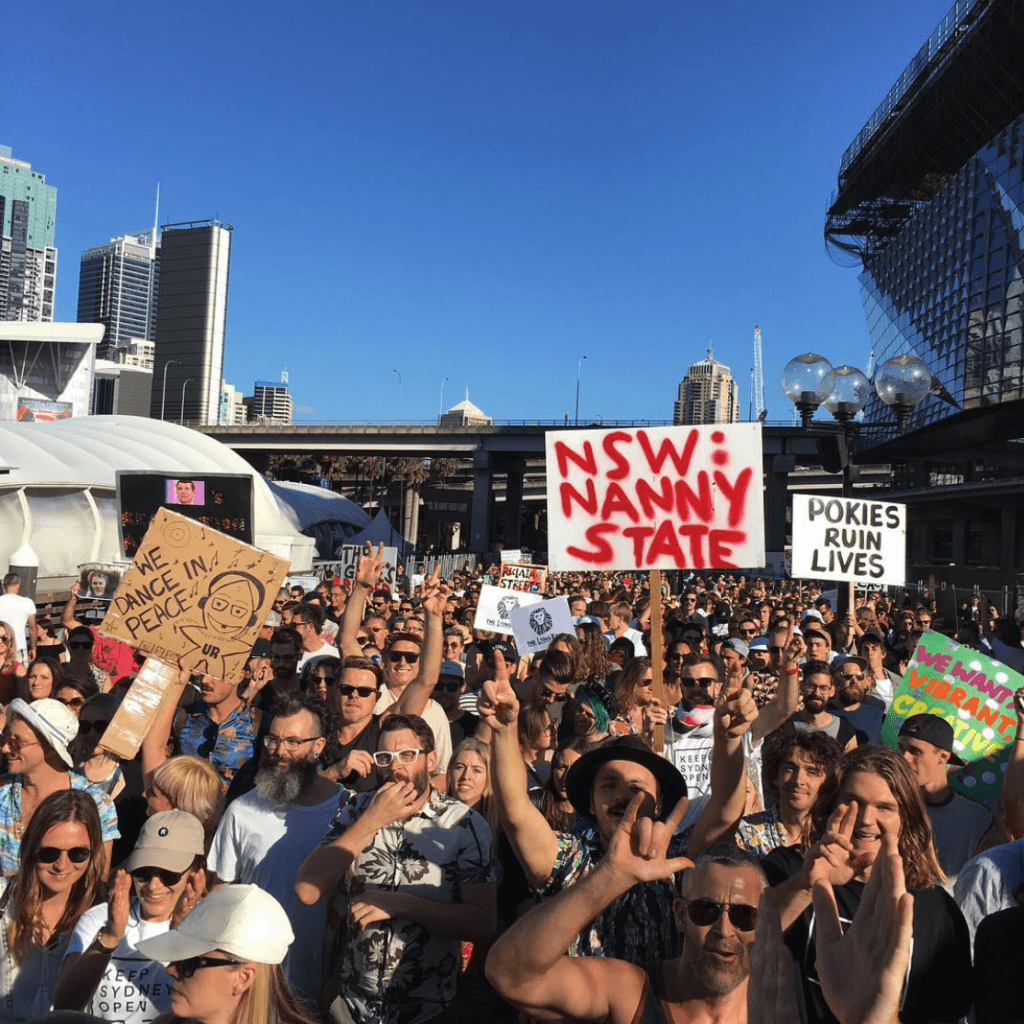
The last Reclaim the Streets event I DJ'd was a protest against the lockout laws, which were killing Sydney nightlife and nighttime economy. The only place that was allowed to be open at the time was the casino. The protest was fantastic. There were multiple sound systems on wheels. I think it started at Town Hall and culminated in a very large, like 8-foot-long turd being placed in front of the casino sign as a protest. It was just ridiculous that this violent gambling, money laundering business got the full support of the government while the rest of the city was dying culturally.
The protest element of it has always gone hand in hand with the quasi-legal nature of the whole movement, and that energy can be harnessed and expressed in different ways. During Mardi Gras we are reclaiming the street for one day a year, and it's vital to our community, as is the afterparty, and all that goes with that. Particularly during the AIDS epidemic, it was unbelievably important that it kept going. There were calls to stop it, because people like Fred Nile thought is was a health hazard. It was crucial that it went ahead, because that would have undone all the gains that had been made and sent an awful message that gay people were somehow contagious. I've read so much anecdotal evidence of people who were nearing the end of their life, who would hold on for one last Mardi Gras. It was like, you know, gay Christmas, a celebratory thing that came from protest but took on this larger community resonance because it was a public event. That initial war cry came out of the bars and onto the streets. On the streets, in public space, it needs to be seen.
Can you tell us about the Tekno Train you curated for Vivid Sydney 2024. Was that the first time you brought your two passions - music and trains - together to transform shared public transport spaces?
I think that's what I was tapping into with Tekno Train. I mean, I love trains, and I love techno, and it just sort of occurred to me one day what would happen if I could do something bringing them together?
Initially we were going to try and do it for World Pride in 2022. I hadn't really developed the idea too far. It was more like, we'll have a train and we'll have techno on it. It'll just be something special to add to the city. It was incredibly difficult to make happen though. There's so many layers of bureaucracy and safety and liability that you have to get through.
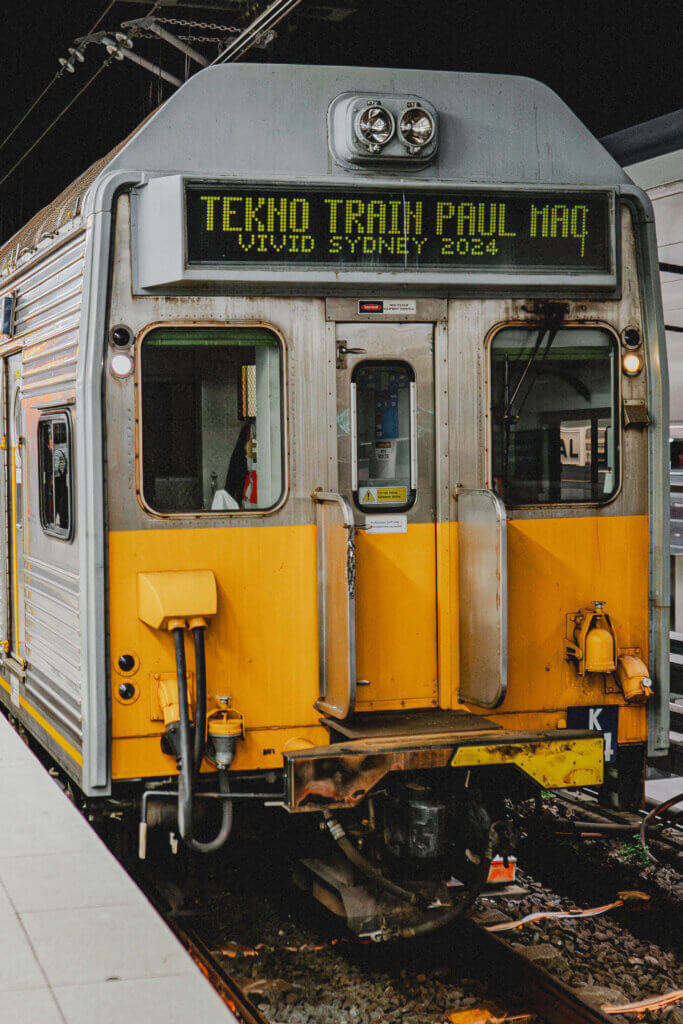
But then Vivid 2024 came along, and we tried again. This time it was better. We got some funding and it was just, how do we do this? It ended up being called Tekno Train by Paul Mac. It was meant to be like an installation where you get on a train and this experience happens. We met with two special events people at Sydney Trains and they were awesome.
They could tell I was such a train enthusiast, and I think that meant they trusted it more. It wasn't just some idiot DJ grabbing a train and running amok.
I actually have a bunch of gay train driver friends who I call the Lavender Mafia of the railway. We workshopped the routes. Gary Massard and John Snyder, who work for Sydney Trains, came up with suggestions as well. We came up with the idea of a Scenic Route, which would be more chilled; over the Harbour Bridge, down that Secret Railway line to Luna Park, and back. Then there was the Tek Express, which was faster, darker and later. It went around City Circle, out to Turrella, and back via the Airport line.
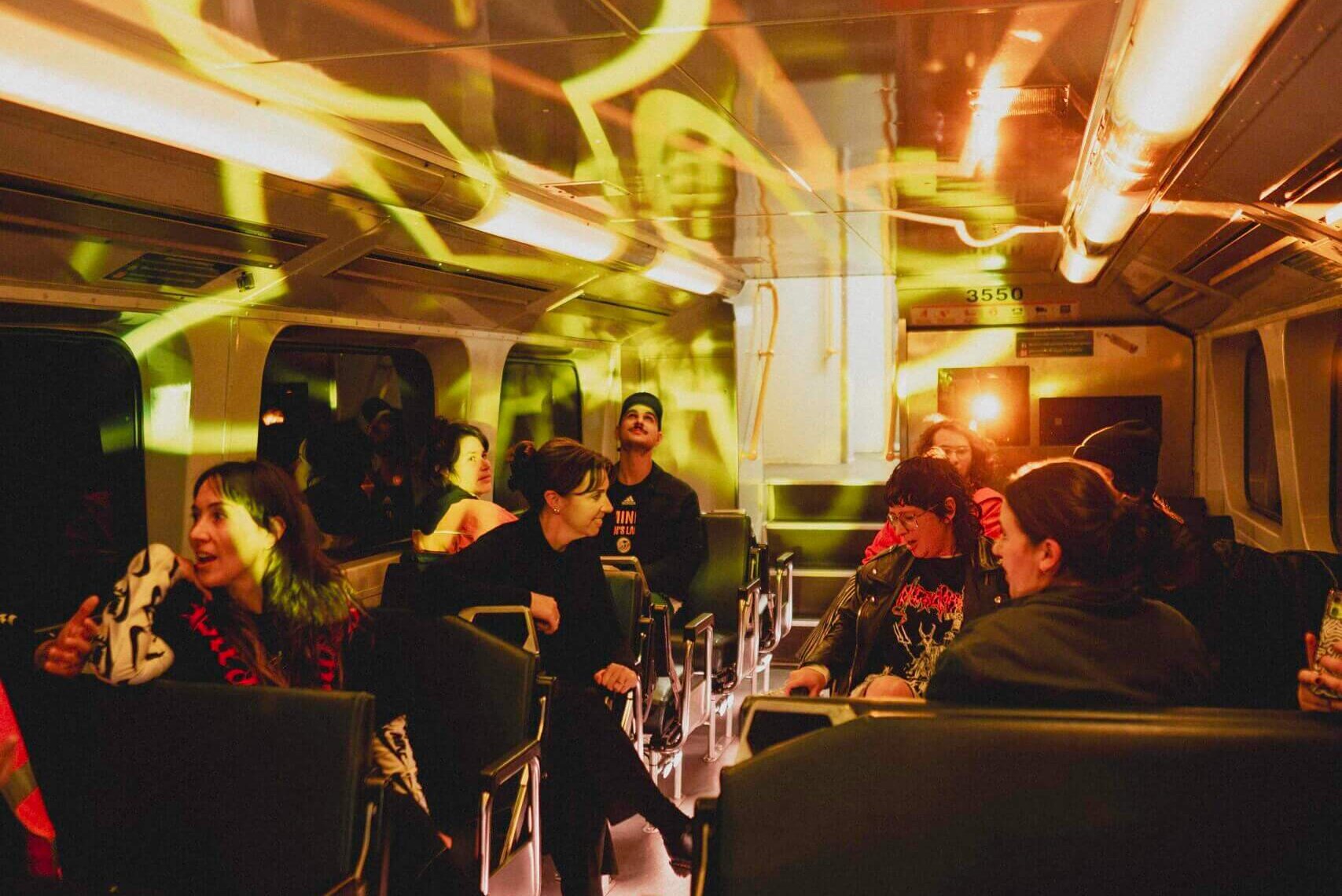
I worked with SimpleMotion on the sound, lighting design and installation. I wanted to make sure that the music and the train sort of synergized, so we worked out the timing of the routes, and I composed all the music to match the scenery. Then we linked the speed of the train to the global tempo of the track; as the train sped up, so did the music. We also had Nana Miss Koori, who's the Indigenous drag queen, as the kind of conductor, who did a Welcome to Country, but also gave interesting historical facts along the way. It was meant to be, not just reclaiming the train, but also the route, and understanding when we got to Turrella, for example, that was a change of Country (Kameygal) and Nana Miss Koori would announce that.
For the soundtracks for Tekno Train I sampled a lot of station announcements and made field recordings, which were built into the rhythms, and air brakes, and train horns playing the melodies. So it was meant to be this kind of holistic things with synchronized lights.
Can you talk about the process of negotiating and realising the Tekno Train. Was it straightforward? Were there many bureaucratic hurdles? Would you do anything differently in future?
My initial plan was that the Tekno Train would just appear randomly, it'd be timetabled, but it could be at any time, kind of like this weird, surprise gift to the city. That ended up having a million operational nightmares to it. Like, if it's a public service then it needs to have certain lighting levels, certain sound restrictions. The drivers might not want to drive it, or it might end up in a different shed for maintenance. But if we did it as a special event that was ticketed, then we had a guaranteed service, and they gave us a train, and we put all the lights in. It was meant to be seated at first, more of a kind of music light installation.
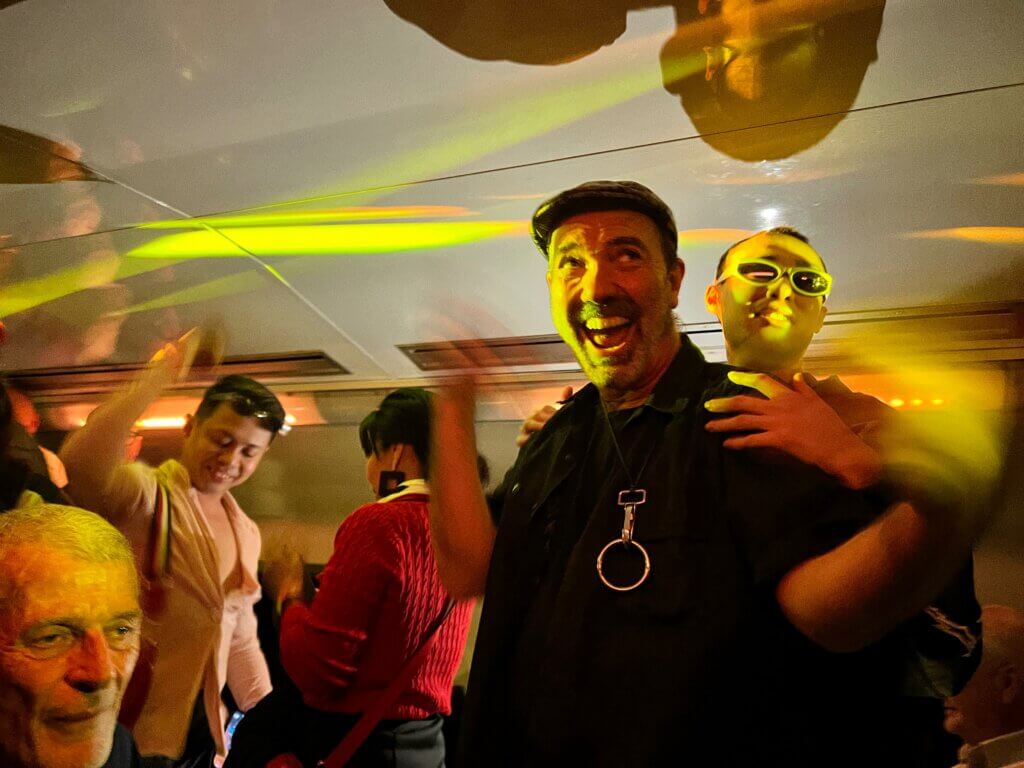
There were three trips a night. I went on the third trip on the first night, and the announcement came on to say it was a seated event, then one woman who was in my carriage just stood up and went, “fuck that, who wants to dance with me?” So, I went over and danced with her, as the attendants and the railway people were all looking a bit nervous. But nobody was getting hurt. By the fourth night, they said, 'OK people can dance'. So we took out the seated experience announcement and it took on a life of its own. I think because it was only an hour long, not too much could go wrong.
I suppose when we talk about reclaiming space, we've reclaimed this space for an hour. We're taking what is normally a boring, functional, commuter thing and turning it into this magic thing that we are now occupying, and we are now celebrating and tapping into.
Is there anything that you would do differently if you did it again?
Yeah, I mean, we learned a lot. It was such a technical nightmare to do. I think I'd love to push it a bit harder with the lighting experience thing, but then again, you need to be sensitive to people who can't do strobe lights and things like that.
My initial vision was that it would be successful enough that it could happen every year, and then I could share it with other people, and invite other composers in and just make it a magic thing that happened once a year, but we just got extremely lucky that first time with all of the technical know-how and the permissions. You know, it's funny, because the initial Zoom meeting was myself, the producer, and those two guys from Sydney Trains. As it got closer and closer, then there were union reps, public liability people, and then it became like 60 people at a meeting. It was kind of full-on towards the end. It was very difficult to make it happen. There were so many moving parts. But we did iron out a lot of the bugs, so if we were to do it again, we'd know how to do it.
We did apply again in 2025, but we didn't get the funding, and the artistic director at Vivid had changed. They didn't have ticketed events that year. All the moving parts changed again, so it didn't happen. I don't know, maybe it was just one of those magic one-off things. It happened, and we got away with it, and wasn't it beautiful?
What have you learned - about music and about public spaces - from working at the intersection of them?
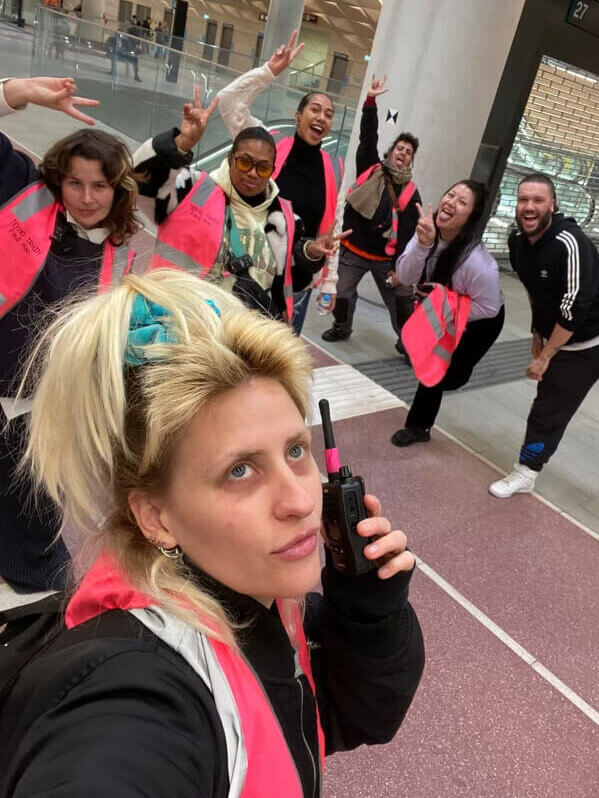
I didn't really know what it was going to feel like when it started off. It was just this kind of idea of techno and trains together at last. But the reason it worked was the intersection with community. A lot of the attendants were actually from the community that I belong to, this sort of underground queer community, and they were invited personally by the producer Thom Smythe. So they were all extremely queer, really fun people, who modelled the kind of behaviour that was expected. If there was any kind of dickheadery going on, they just knew how to handle it, how to de-escalate and model positivity.
I think that's why it worked. It was taking a small underground community, and upscaling that to a major event, with them leading the way.
Do you have any more public space projects planned for the future? Or do you have a dream project you'd realise if budget and pragmatics weren't an issue?
I mean, that kind of was my dream. So it would just be to do it again, and more often. I just think there's something particularly beautiful about trains, and even the timing of it worked. The public had to line up in that beautiful new sandstone tunnel bit at Central. The metro tunnels weren't open yet, so there was this spare open space to corral people before the trains happened. It was a celebration of that space as well and for the staff that worked there. They were all really keen. All the drivers ended up having to do a sort of a raffle to see who got shifts, because it was really popular. At the end of a train ride there'd be guards and train drivers coming out wanting a selfie, and thanking us for putting it on. It was just all-round positivity. You know, can you imagine being City Rail staff, and just whenever there's anything goes wrong, it's like people swearing at them and just being awful. It was just wonderful that for three and a half weeks, three times a night, there was a blissful crowd of people being really nice to each other, and to the staff. Yeah, so, no, I wouldn't change much, to be honest. Do it every year.
Do you have a favourite public space? And what makes it meaningful for you?
I mean ... I sound like a nerd ... but I really love stations. Like, I think my cathedral is Hauptbahnhof in Berlin. I just love the infrastructure that goes around trains. Even Southern Cross in Melbourne, it's really an amazing building; a really functional, inviting space to get you from the city to your destination. I love Central Station too, I'd love to do a concert in there, just in that major space. Wouldn't that be awesome? I think that is the other thing with public spaces, it'd be good to write site-specific music that worked with the good things and the bad things about the space. But, it's certainly something I'd like to explore in the future, as I continue to follow my own obsessions.