Past Event
Ecology-driven Renewal for Sydney with Salvador Rueda
Renowned Spanish urbanist Salvador Rueda Palenzuela presented Barcelona's Superblocks
Superblocks as a model for sustainable urban living in Sydney?
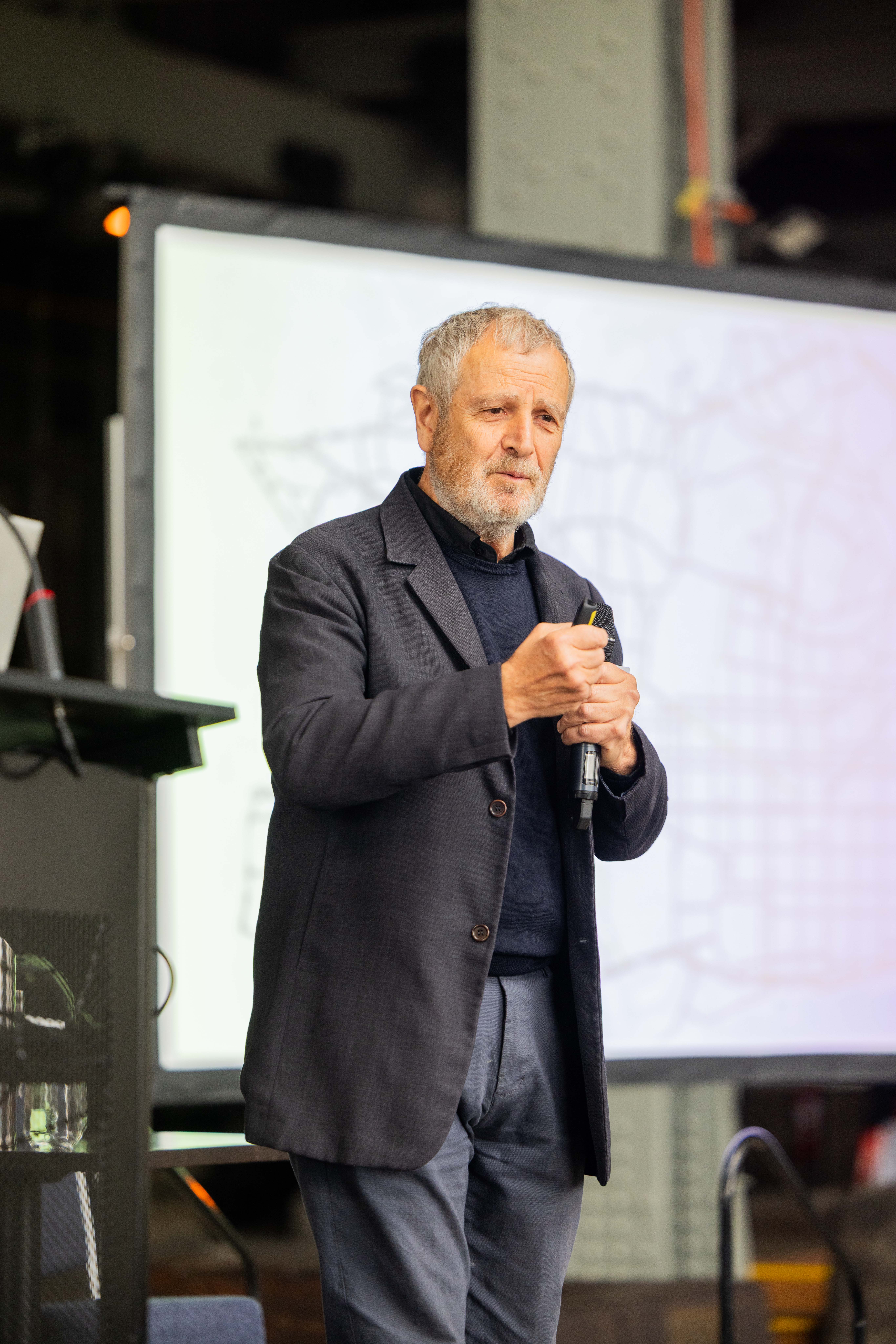
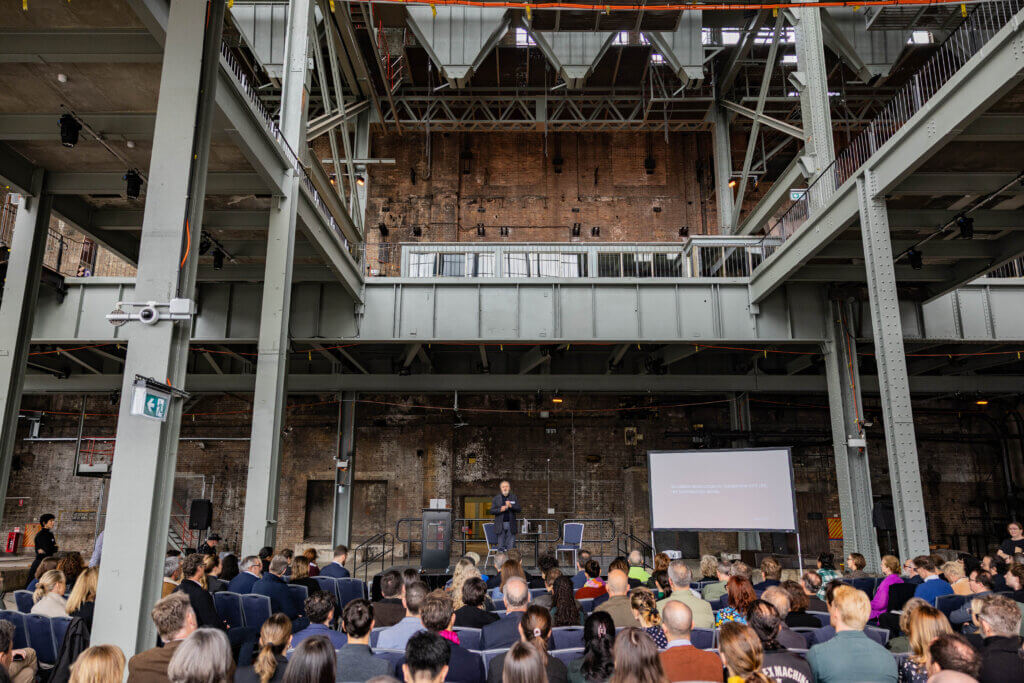
Salvador Rueda visited Sydney in May 2025, and we were thrilled to welcome him as part of The Power of Public Spaces program. Together with Placemaking NSW and the Committee for Sydney, we co-hosted an inspiring talk at the White Bay Power Station. Salvador shared his vision behind Barcelona’s groundbreaking Superblocks program, which he launched in 2016—a model that’s reshaping how cities think about streets and public life.
Streets at the heart of sustainable cities
At the heart of Superblocks is a simple but powerful idea: streets aren’t just for cars—they’re the main public spaces of our cities. Urbanist Jane Jacobs famously wrote in The Death and Life of Great American Cities that the vitality of streets is deeply tied to the health of urban democratic life. Salvador’s work brings that idea to life.
Since the program began, Barcelona has pedestrianised 2,500 streets and created 31 Superblocks. These aren’t just traffic-calming measures—they’re transformations. Superblocks turn streets into places where people can play, dance, create art, and connect with each other. Instead of being mere transport corridors, streets become vibrant event spaces for public art and performances, inviting everyone to take part in the shared life of the city.
Watch the full talk here:
Could a superblock model work in Sydney?
Salvador says that re-thinking the way the public transportation network operates is key. The diagram below should how the superblock model diverts traffic away from the centre of the blocks to the periphery.
“If you want to make something like this in Sydney you must start with the public transport network”.
-Salvador Rueda Palenzuela
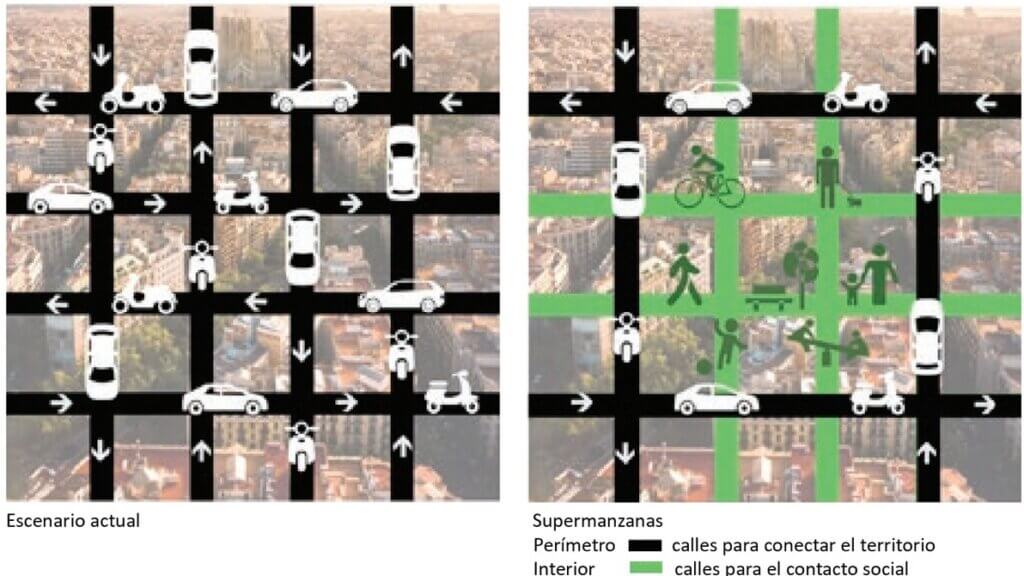
Salvador's Superblock model. Image by Salvador Rueda Palenzuela
After the talk, some participants took part in a workshop to delve deeper into Salvador’s ideas. One key theme was how cities can repurpose remnant industrial sites in ways that honour heritage and memory while restoring pre-colonial ecologies. Drawing inspiration from the White Bay Power Station setting, participants shared and mapped ideas for reconnecting streets and places—bringing local ecologies and histories to the surface and promoting walkability. A central takeaway from the workshop was the need to include community voices in sustainable urban renewal, ensuring projects reflect local needs and priorities.
Salvador Rueda. Photo: Scott & Co photography
Connections
Creating quality public spaces that are accessible, safe, and welcoming for all is vital for building resilient, interconnected societies where individuals can thrive collectively.